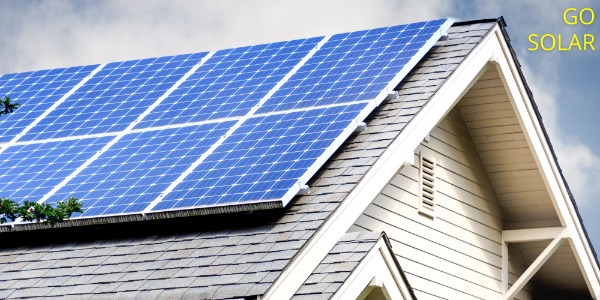
Framingham is part of a multi-community solar campaign called plugIN. Visit plugINmetrowest.org to learn more and sign up for the latest updates.
Have you seen solar photovoltaic (PV) panels around Framingham and wondered if solar is a good fit for you? You can go solar if you are a homeowner with a sunny roof with little or no shading. Let us explain.
HOW TO GET STARTED
There are a LOT of options when it comes to choosing a solar PV system. Our partner EnergySage has solar expertise and a support system for all of your questions. They provide an online solar marketplace that will help you decide whether owning or leasing a solar PV system will work best. You also will be able to directly compare quotes from pre-screened installers. See how it works in their Solar Power Explained video.
The first decision point is about money:
1. Do you want to buy your own solar panels? The advantage is that you will see the best financial return. The disadvantage is that you have to invest the money.
2. Many solar companies will install solar panels on your roof at no cost to you. You will sign a long-term contract agreeing to purchase electricity generated by those panels at a specific price. Two things to be aware of are: first, if you finance with them, the mark-up can be 15% or more (see tip below), and second, clarify what happens at the end of your contract period. Check out your options on the EnergySage marketplace to do some online comparisons.
State and Federal Incentives
The Inflation Reduction Act reinstated a 30% federal tax credit for homeowners and condo owners installing solar (both equipment and installation costs qualify). This is retroactive back to Jan. 1, 2022 and will remain in effect until Dec. 31, 2032. The solar 30% tax credit can be paired with a 30% tax credit for battery storage and/or a 30% tax credit for an electric panel upgrade (capped at $600). See how much you would qualify for using this savings calculator from Rewiring America. If you can’t take all of the tax credit in the first year, you can carry it over to the next year. Note: To the best of our knowledge, the federal incentives still apply under the new administration, at least in 2025, but may be subject to change.
And, lucky you! You live in Massachusetts where you also could receive a Massachustts tax credit for the lesser of $1,000 or 15% of qualifying costs.
BONUS: if you own your own panels (even those with financing), you can register for monthly incentives from the Solar Massachusetts Renewable Target Program (SMART). Credits over your own usage may be donated to low income households.
Helpful financing tip: Get your solar loan from a bank or other lending institution. If you finance through some solar companies, there are dealer fees, adding as much as 25% to the cost of the system. The company may also require you to surrender your tax credit to offset the cost of the system, or take a larger loan covering the system cost before the tax credit.